




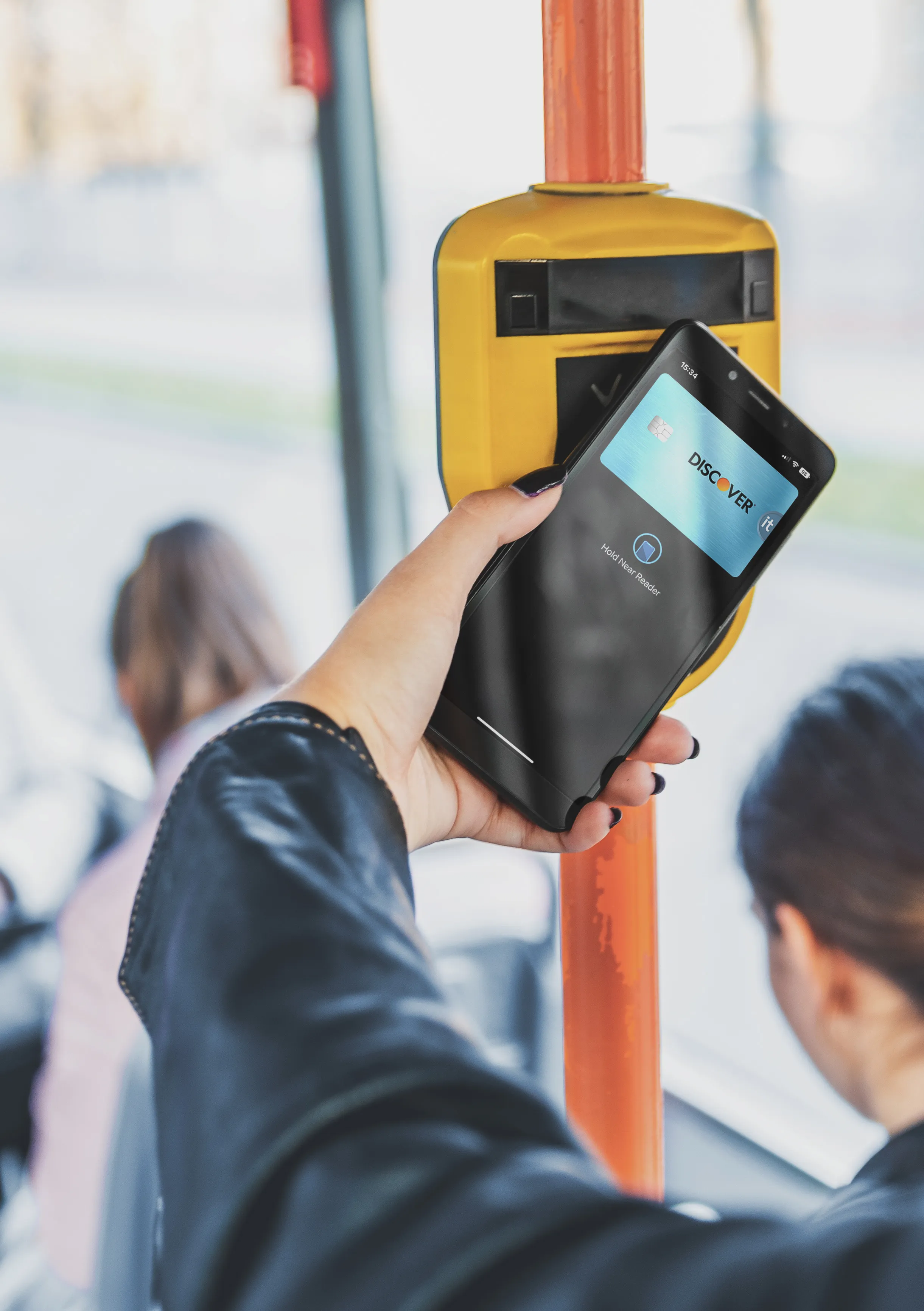
In transport, payments are part of the passenger journey, not a back-office detail. A mobile top-up on the way to the platform, a ticket bought mid-commute: these moments need to be quick, dependable and almost invisible. When they don’t work, the impact is immediate. Customers abandon checkout, complaints rise and operational teams feel the strain.
At the same time, the fraud landscape has shifted. Automated attacks are more common, scams are more convincing and tactics change quickly. In that environment, leaning on defences built for a simpler era can create gaps that only show up when it’s too late. Put simply, we must fight fire with fire.
Account takeover and passenger experience
Transport ticketing is a particularly tough environment for fraud controls because the stakes are high and the decision window is tiny. Many transport payment journeys happen at points of entry and transfer, where a slow or uncertain outcome creates friction straight away.
Open-loop models are designed to improve convenience and security, and card networks explicitly position open-loop transit as enabling enhanced payment security and lower fraud risk at transit points of entry. But the shift to open-loop and digital-first journeys also increases the number of places fraud can show up: account creation, top-ups, stored credentials, customer service flows and post-journey adjustments.
A key ‘right now’ risk is account takeover, which is being fuelled by automated attacks that reuse breached credentials (often through credential stuffing). Breached-credential checks can help spot takeover attempts early, but a clear account recovery process is just as important, because once an account is compromised, genuine customers don’t want to start again from scratch.
In transport, where many users rely on their account to travel, that recovery experience matters: if legitimate passengers get locked out or repeatedly declined, you can lose trust and usage even after the fraud incident is resolved.
This is also why ‘least friction, most security’ has become the central design challenge. A dedicated open-loop risk framework describes an end-to-end approach that aims to deliver competitive customer experience while creating the least customer friction and still strengthening fraud mitigations across the lifecycle.
That combination of speed, scale and lifecycle complexity is exactly where AI-driven decisioning adds value: it can spot patterns earlier, adapt faster and keep genuine passengers moving.
Old-school fraud detection
Rules-based fraud detection is the traditional way of protecting payments: if a transaction matches defined conditions, block it. Rules-based fraud detection has been the default for years. Rules still have a place, especially for known patterns, but using them alone creates real drawbacks in high-volume, time-sensitive environments like transport ticketing.
- False positives:
Rules are binary by nature and struggle with context. That often leads to false positives, where genuine customers are declined because their behaviour happens to resemble a known fraud pattern. In transport, false declines don’t just lose a sale: they can interrupt a journey and chip away at trust.
Inefficient and hard to scale:
A rules-only approach means the library must keep expanding as fraud evolves. Over time, the system becomes slower and harder to maintain. It also puts a heavy burden on fraud analysts who spend their time adding, tuning and testing rules rather than focusing on higher-value investigation and strategy.
Rules can support a wider approach, but they’re rarely enough as the primary defence when fraud tactics evolve quickly.

Next-generation fraud detection
Next-gen fraud detection focuses on AI and machine learning. Machine learning is a set of methods and techniques that allow systems to recognise patterns and trends and generate predictions based on those patterns. Deep learning is a subset of machine learning. Its advantage is that it can create flexible models for specific tasks, such as fraud detection, and adapt as behaviour changes.
Rather than relying on a fixed list of ‘known bad’ scenarios, these models learn what normal looks like and identify what doesn’t fit. That matters in transport, where legitimate behaviour varies by time of day, passenger type, seasonality, special events and geography.
Why machine learning suits fraud detection
- Speed
Fraud decisions need to happen fast. The longer a buyer’s journey takes, the less likely they are to complete checkout. In transport, that friction can be especially costly because customers are often purchasing on the move. Machine learning can evaluate large numbers of signals in real time, returning a decision in milliseconds and keeping the journey flowing.
- Scalable
Machine learning systems improve with larger datasets because they have more examples of genuine and fraudulent behaviour. That helps models spot differences and similarities more quickly and apply that learning to future transactions. As transport networks grow, channels expand and more ticketing journeys shift to digital-first experiences, this ability to scale without constant manual rule-writing becomes a clear advantage.
- Efficiency and cost
Machine learning does the heavy lifting of data analysis at a speed and scale that even large teams can’t match. It can run continuously, handle repetitive tasks and only escalate edge cases where human judgement is genuinely needed. That reduces manual workload, helps teams focus on meaningful exceptions and supports a more sustainable operating model.
- Accuracy
A strong machine-learning model can identify risk signals before a chargeback has even happened. It can also look beyond transaction history and assess behavioural patterns that are hard to capture with rules alone. For example, it might flag suspicious activity based on how a user navigates a purchase flow, how they enter information or signals that suggest automation. Catching risk earlier helps reduce losses while avoiding unnecessary friction for genuine passengers
The takeaway for transport operators
The goal isn’t to add hurdles. It’s to protect revenue and trust while keeping journeys seamless. As fraud becomes faster and more sophisticated, the most resilient approach is layered: combine human expertise with systems that can learn, adapt and respond at the same pace as the threat. That’s why AI-driven fraud protection matters now.
At Transport Ticketing Global 2026, running from 17-18 March at Olympia London, John Dobson will share practical ways to apply AI and machine learning to cut fraud, protect conversion and build scalable defences for evolving digital threats. His presentation is titled ‘The Future of Payments: Why AI Fraud Protection Matters Now’.


Continue reading related articles

Using AI to tackle fraud
AI can outsmart fraudsters at speed, but it’s not a silver bullet. The best protection blends machine learning with human insight

AVM Venice: a transport story
Contactless payments are keeping Venice moving, making travel easier for locals and tourists across its unique transport network

Transaction Risk Analysis
Cut fraud risk without slowing journeys. See how TRA uses real‑time risk scoring to help keep your transport payments flowing

Helping thousands of customers around the world grow their business through payments
Customer service and support
We’re here to help!
Customer service: 0345 850 0195 (menu option 2)
Telephone: Monday to Friday, 8am to 5pm
Chat: Monday to Friday, 8am to 6pm
Elavon technical support: 0818 20 21 30 (menu option 1)
24 hours a day, 365 days a year
Opayo product support: 0191 313 0299
24 hours a day, 365 days a year
Copyright © 2026 | U.S. Bank Europe DAC. Registered in Ireland with Companies Registration Office. The liability of the member is limited. United Kingdom branch registered in England and Wales under the number BR022122.
U.S. Bank Europe DAC, trading as Elavon Merchant Services, is a credit institution authorised and regulated by the Central Bank of Ireland. Authorised by the Prudential Regulation Authority. Subject to regulation by the Financial Conduct Authority and limited regulation by the Prudential Regulation Authority. Details about the extent of our regulation by the Prudential Regulation Authority are available from us on request.
Helping thousands of customers around the world grow their business through payments
Customer service and support
We’re here to help!
Customer service: 0345 850 0195 (menu option 2)
Telephone: Monday to Friday, 8am to 5pm
Chat: Monday to Friday, 8am to 6pm
Elavon technical support: 0818 20 21 30 (menu option 1)
24 hours a day, 365 days a year
Opayo product support: 0191 313 0299
24 hours a day, 365 days a year


Copyright © 2026 | U.S. Bank Europe DAC. Registered in Ireland with Companies Registration Office. The liability of the member is limited. United Kingdom branch registered in England and Wales under the number BR022122.
U.S. Bank Europe DAC, trading as Elavon Merchant Services, is a credit institution authorised and regulated by the Central Bank of Ireland. Authorised by the Prudential Regulation Authority. Subject to regulation by the Financial Conduct Authority and limited regulation by the Prudential Regulation Authority. Details about the extent of our regulation by the Prudential Regulation Authority are available from us on request.

Essential cookies enable core functionality such as page navigation and access to secure areas. The website cannot function properly without these cookies; they can only be disabled by changing your browser preferences. Please see our Cookie Policy for further information.
Performance cookies help us to improve our website by collecting and reporting information on its usage (for example, which of our pages are most frequently visited).
These cookies and similar technologies gather information about your browsing habits. They remember that you've visited a website and share this information with other organisations, such as advertisers and platforms on which we advertise. They do this in order to provide you with advertisements that are more relevant to you and your interests. These cookies and similar technologies gather information about your browsing habits. They remember that you've visited a website and share this information with other organisations, such as advertisers and platforms on which we advertise. They do this in order to provide you with ads that are more relevant to you and your interests.
Find out more about cookies on https://www.allaboutcookies.org