




In 2025, a wave of sophisticated cyber-attacks hit the retail industry. In the space of a few chaotic weeks, ecommerce platforms were knocked offline, supply chains faltered, and retailers were forced to confront the uncomfortable truth that the systems underpinning modern commerce were far more vulnerable than many had assumed.
For some businesses, the damage was immediate and severe. Transactions stopped, operations ground to a halt, and teams scrambled to understand how attackers had managed to infiltrate their systems so effectively. For others, the attacks were a warning of what could happen.
That sense of vulnerability has not fully disappeared and many retailers still speak of a lingering anxiety. But with the benefit of distance, it’s worth asking an important question. Has anything actually changed, and if so what?
Have retailers strengthened their defences in the wake of last year’s crisis? Have consumers become more wary about where they share their data? Or, are retailers simply burying their heads in the sand and crossing their fingers that it won’t happen again?

‘Retail today is omnichannel. Everything is connected’
The latter simply isn’t an option. Candice Pressinger, Elavon Director of Customer Data Security for Europe, says the attacks forced many retailers to confront a fundamental shift in how security needs to be approached in the modern retail ecosystem.
“Retailers still talking about defending a perimeter are defending a business model that no longer exists. Customers move seamlessly between stores, ecommerce sites, mobile apps and payment channels. Criminals do too,” she explains. “Retail today is omnichannel. Everything is connected. Ecommerce, payments, logistics, store systems, mobile apps. The old idea that you can just build a wall around your systems doesn’t hold up in that environment.”
That realisation has accelerated the adoption of newer security frameworks, particularly zero-trust architectures. Unlike traditional security models, which assume users and devices inside a network are trustworthy, zero-trust treats every interaction as potentially risky and requires continuous verification.
Candice notes that research suggests around 63 per cent of organisations globally now have partial or full zero-trust implementation, reflecting how quickly attitudes have shifted since the attacks. But the biggest lesson is not simply about adopting new technologies. In many cases, the attacks exposed how fragmented retail security infrastructure had become.
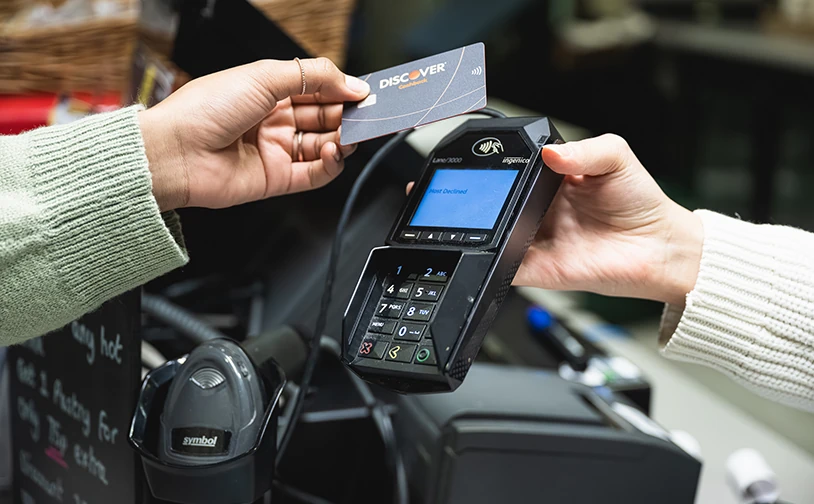
An integrated security solution
“The average retailer doesn't have a security problem. They have an integration problem. Most organisations already own enough security technology. The issue is that the tools operate in isolation while attackers operate across the entire ecosystem,” she says. “It’s about integration and intent.”
For years, many retailers responded to emerging threats by layering new tools on top of existing systems such as fraud detection platforms, identity verification tools, and payment security layers, often without ensuring they actually worked together effectively. The result was a patchwork of security solutions that could create just as many problems as they solved.
Instead, the most effective security strategies are increasingly focused on how these systems interact with each other, sharing insights, co-ordinating responses, and forming a unified defence against emerging threats.
At the same time, retailers face another delicate balancing act of protecting their businesses, without damaging the all-important customer experience. In ecommerce, even small amounts of friction can have a measurable impact on sales. Additional verification steps, overly aggressive fraud filters, or poorly implemented security checks can quickly push customers to abandon their baskets.
This is where security strategy often goes wrong, says Candice. “Security should be seen as a growth lever, not something that throttles your business,” she says. In practice, that means designing systems that can detect and stop malicious activity without obstructing legitimate customers.
“Over-zealous fraud prevention isn’t good security,” she adds. “It’s just lost revenue.”

Risk modelling and behavioural analysis
The financial stakes are significant. Research suggests the UK retail sector lost £1.1 billion to fraudulent activity last year, highlighting the scale of the challenge retailers face in protecting transactions without disrupting the flow of commerce.
Yet many businesses still approach the problem from the wrong angle.
“Nearly half of merchants prioritise reducing fraud over improving customer experience,” she says. “But if your systems block good customers along with bad actors, you’re creating a different kind of risk.”
The goal, she argues, should be security systems that work quietly in the background identifying suspicious activity, while allowing legitimate transactions to move forward without interruption.
This requires increasingly sophisticated risk modelling, often powered by artificial intelligence and behavioural analysis, which can evaluate signals such as device identity, purchasing patterns, and transaction context in real time.
But while technology has advanced rapidly over the past year, one of the industry’s most significant vulnerabilities remains organisational rather than technical.
Emerging technologies such as AI, machine learning, and automation are rapidly reshaping the cyber threat landscape. But many senior decision-makers still lack a deep understanding of how these technologies operate or the risks they introduce.
A survey by digital engineering consultancy firm Akkodis suggests that executive confidence in AI strategies is unstable, and actually fell from 69 per cent in 2024 to just 58 per cent in 2025.
Meanwhile, the threat landscape itself shows no signs of slowing down.
‘Security is never finished’
Candice points to the rapid emergence of new technologies such as agentic AI as one example of how quickly the environment is changing. “Agentic AI is coming down the road like a juggernaut,” she says. The next generation of attacks won't be conducted by individuals. They'll be conducted by autonomous systems capable of identifying weaknesses, adapting tactics and executing fraud at a scale that humans simply cannot match
While these technologies offer enormous potential for businesses, they also create new opportunities for cyber criminals, who are increasingly using automation and AI to scale their attacks. For retailers, this means the idea of achieving “complete security” is unrealistic. “Security is never finished,” Pressinger says.
Instead, the focus must shift towards resilience, and building systems capable of adapting to new threats and recovering quickly when incidents occur. This involves a combination of adaptive risk models, identity-first security frameworks, and continuous scenario planning designed to anticipate how attack methods might evolve.
But perhaps most importantly, it requires a shift in mindset. “Future-ready retail isn’t about stopping every failure,” Candice explains. “It’s about making failure non-catastrophic.”
In other words, the goal is not to eliminate cyber risk entirely (an impossible task), but to ensure that when incidents do occur, they don’t bring an entire organisation to its knees.
Protecting customer relationships and systems
That philosophy has become increasingly important as retailers recognise the long-term consequences of cyber incidents extend far beyond operational disruption. Trust, after all, is one of the most valuable currencies in modern retail. “When something goes wrong, consumers remember,” Candice says. “Customers won’t come back if their data is compromised and the issue isn’t handled well.”
For retailers, that means cyber security isn’t just a matter of protecting systems, but also protecting vital relationships with customers. And while the retail industry has undoubtedly strengthened its defences, the reality is that cyber threats continue to evolve at a relentless pace.
Retailers may be more aware of the risks they face. Their systems may be more resilient than they were before the attacks that hit headlines around the world. But the sense that the industry is operating in an increasingly hostile digital environment hasn’t disappeared. If anything, it has become the new normal. Cyber security is an ongoing battle that could well shape the future of retail.
However, whilst caution and active protection is a must, the positive news is that with the right protection, it’s possible for any business to effectively prevent attacks. In fact, the UK Government's Cyber Essentials scheme says that organisations that introduce cyber security controls make 92% fewer cyber insurance claims.
Now, the onus is on you to ensure that you’re protected not just for today, but for the future. Retailers that continue to view cybersecurity as a compliance exercise will always be reacting to yesterday's attack. The organisations that win will treat security as a strategic capability, a driver of customer trust, and a core part of how they compete. In an AI-powered threat landscape, resilience is no longer a defensive advantage. It's a commercial one.






Helping thousands of customers around the world grow their business through payments
Customer service and support
We’re here to help!
Customer service: 0345 850 0195 (menu option 2)
Telephone: Monday to Friday, 8am to 5pm
Chat: Monday to Friday, 8am to 6pm
Elavon technical support: 0818 20 21 30 (menu option 1)
24 hours a day, 365 days a year
Opayo product support: 0191 313 0299
24 hours a day, 365 days a year
Copyright © 2026 | U.S. Bank Europe DAC. Registered in Ireland with Companies Registration Office. The liability of the member is limited. United Kingdom branch registered in England and Wales under the number BR022122.
U.S. Bank Europe DAC, trading as Elavon Merchant Services, is a credit institution authorised and regulated by the Central Bank of Ireland. Authorised by the Prudential Regulation Authority. Subject to regulation by the Financial Conduct Authority and limited regulation by the Prudential Regulation Authority. Details about the extent of our regulation by the Prudential Regulation Authority are available from us on request.
Helping thousands of customers around the world grow their business through payments
Customer service and support
We’re here to help!
Customer service: 0345 850 0195 (menu option 2)
Telephone: Monday to Friday, 8am to 5pm
Chat: Monday to Friday, 8am to 6pm
Elavon technical support: 0818 20 21 30 (menu option 1)
24 hours a day, 365 days a year
Opayo product support: 0191 313 0299
24 hours a day, 365 days a year


Copyright © 2026 | U.S. Bank Europe DAC. Registered in Ireland with Companies Registration Office. The liability of the member is limited. United Kingdom branch registered in England and Wales under the number BR022122.
U.S. Bank Europe DAC, trading as Elavon Merchant Services, is a credit institution authorised and regulated by the Central Bank of Ireland. Authorised by the Prudential Regulation Authority. Subject to regulation by the Financial Conduct Authority and limited regulation by the Prudential Regulation Authority. Details about the extent of our regulation by the Prudential Regulation Authority are available from us on request.

Essential cookies enable core functionality such as page navigation and access to secure areas. The website cannot function properly without these cookies; they can only be disabled by changing your browser preferences. Please see our Cookie Policy for further information.
Performance cookies help us to improve our website by collecting and reporting information on its usage (for example, which of our pages are most frequently visited).
These cookies and similar technologies gather information about your browsing habits. They remember that you've visited a website and share this information with other organisations, such as advertisers and platforms on which we advertise. They do this in order to provide you with advertisements that are more relevant to you and your interests. These cookies and similar technologies gather information about your browsing habits. They remember that you've visited a website and share this information with other organisations, such as advertisers and platforms on which we advertise. They do this in order to provide you with ads that are more relevant to you and your interests.
Find out more about cookies on https://www.allaboutcookies.org