




Choosing a payments provider is an important decision for any hospitality business. Whether you run a café, restaurant, pub, bar, hotel or multi-site group, payments affect more than the moment a customer taps a card or phone.
A good provider should help customers pay easily and securely. A better one should also understand how your business works: the pace of service, the pressure of peak trading, the importance of getting paid on time and the need for support when something goes wrong.
“Hospitality businesses should expect more from their payments provider than just card acceptance,” says Paul Ferguson, Head of Enterprise Hospitality, Elavon Europe. “The right set-up should support service, cash flow, reporting and the day-to-day realities of running a busy venue.”
That means looking beyond hardware and transaction fees. The best choice is the provider that fits how your customers pay, how your team works and how your business plans to grow.
Start with how your customers pay
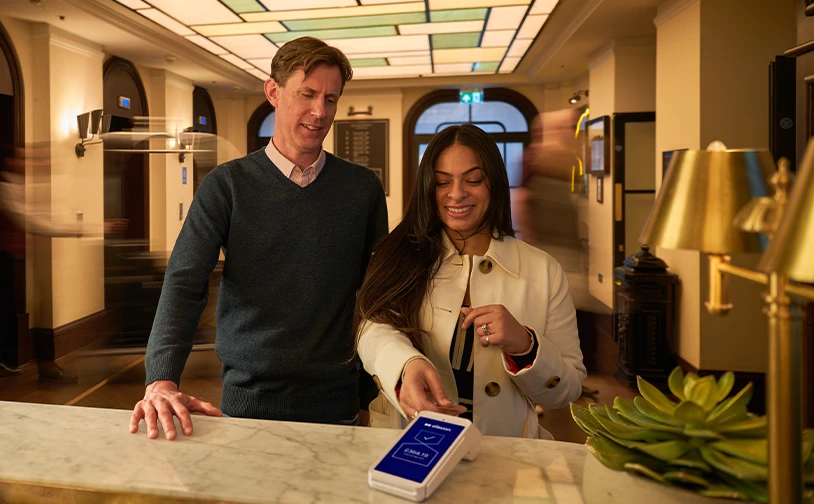
Every hospitality business has its own rhythm. A café may need fast counter payments, mobile wallets and a simple point-of-sale setup that keeps queues moving. A restaurant may need pay-at-table, tipping, split bills, deposits and online ordering.
A pub or bar may need portable terminals, cash and card acceptance, fast authorisations and support during busy trading periods. A hotel may need payments across booking, check-in, restaurants, spa, events, room charges, over-the-phone payments and checkout. “That’s why the first question shouldn’t be which terminal you need,” says Paul. “It should be where, when and how your customers pay.”
For some businesses, the answer is simple. For others, payments happen across several touchpoints: online, face to face, over the phone, by link, at the table or across different parts of a property. Your provider should be able to support those payment moments without making the experience feel complicated for customers or staff.
“We started looking to take on a partner that specialised in hospitality, that understood our business. Elavon came out as a lead partner. They understood how our authorisations and pre-payment model worked and were able to deliver the right level of service to our hotels.”
Gordon Tyler, senior director of operations and finance support for EMEA, Marriott
A provider may be able to process payments, but operators need to know whether it understands their service model:
- Can it support deposits, pre-authorisation, tips, digital wallets, reporting, online payments and busy service?
- Can it work across different channels and locations?
- Can it adapt as customer expectations change?
“The best payment set-up reflects how the business actually serves customers,” says Paul. “A restaurant, café and hotel may all need smooth, secure payments, but the right journey, tools and support will look different for each one.”
Look beyond the headline cost
Price matters. Hospitality margins are tight and operators need to understand fees, settlement terms and contract details. But choosing a payments provider on cost alone can be short-sighted if the set-up creates extra work elsewhere.
A cheaper option may not be better value if it slows service, limits payment choice, makes reconciliation harder or leaves the business without the support it needs. The better question is: will this payment set-up help the business run more smoothly?
That means looking at the full value of the provider, including:
- How quickly and predictably funds reach the business
- How easy it is to view transactions, settlements, refunds and chargebacks
- Whether reporting works across channels, outlets or sites
- What support is available if something goes wrong
- Whether the provider can support the business as it grows
For many hospitality operators, payment value is closely linked to time: time saved at the till, on reconciliation, by having clearer reporting and by getting support quickly.
“I can compare our shops and measure our key performance indicators, which I review daily, weekly and monthly. All that information is to hand, such as revenue, our top-selling products, and weekly or even hourly sales. These little things make running a business so much easier.”
Stephen Kennedy, owner, Copper + Straw speciality coffee shops
Make support part of the decision
Hospitality businesses often need support most when they are busiest. A payment issue during a Saturday night service, hotel check-in rush, wedding or match day can quickly affect sales, staff and customers.
“That’s why support should be considered from the beginning, not after a problem happens,” explains Paul. “Good support is more than just fixing technical issues. It should include onboarding, training, help with chargebacks, guidance on fraud prevention, reporting support and advice on which payment options best suit your business.”
Before choosing a provider, hospitality businesses should ask practical questions:
- What support is available and when?
- How are issues handled?
- Is there help with setup and training?
- Can the provider support online, in-person and over-the-phone payments?
- Does it understand hospitality-specific needs such as pre-authorisation, tipping, deposits, payment links or seasonal peaks?
“Hospitality is a service business and payments support should reflect that,” Paul continues. “You need people who understand busy trading, respond quickly and help you keep service moving.”
Support also matters when customer expectations shift. Digital wallets, contactless payments, online booking, payment links and integrated systems have changed how customers expect to pay. A provider should help the business keep pace without adding unnecessary complexity.
Choose a provider that can grow with you
The payment system that works today should not hold the business back tomorrow.
A café may add another location. A restaurant may introduce takeaway or delivery. A pub may need more portable devices. A hotel may add more guest payment points across the property or support more international customers.
The right provider should be able to support those changes. That does not mean every business needs the most complex setup from day one. It means choosing a provider with enough flexibility to grow with the business.
“Payment needs often change gradually: it could be a new terminal here, an online payment option there, better reporting or more locations,” says Paul. “A strong payments provider should help the business adapt without making payments feel more complicated than they need to be.
“They should support the business you are today as well as the business you’re becoming. Hospitality changes quickly, so payment technology, reporting and support need to be able to move with it.”
Choosing a payments provider is more than a procurement decision. It is a customer experience decision, an operational decision and a cash-flow decision. “The right provider should help customers pay in the way they expect, help teams serve confidently and give owners and managers clearer visibility of what’s happening across the business,” concludes Paul.




Helping thousands of customers around the world grow their business through payments
Customer service and support
We’re here to help!
Customer service: 0345 850 0195 (menu option 2)
Telephone: Monday to Friday, 8am to 5pm
Chat: Monday to Friday, 8am to 6pm
Elavon technical support: 0818 20 21 30 (menu option 1)
24 hours a day, 365 days a year
Opayo product support: 0191 313 0299
24 hours a day, 365 days a year
Copyright © 2026 | U.S. Bank Europe DAC. Registered in Ireland with Companies Registration Office. The liability of the member is limited. United Kingdom branch registered in England and Wales under the number BR022122.
U.S. Bank Europe DAC, trading as Elavon Merchant Services, is a credit institution authorised and regulated by the Central Bank of Ireland. Authorised by the Prudential Regulation Authority. Subject to regulation by the Financial Conduct Authority and limited regulation by the Prudential Regulation Authority. Details about the extent of our regulation by the Prudential Regulation Authority are available from us on request.
Helping thousands of customers around the world grow their business through payments
Customer service and support
We’re here to help!
Customer service: 0345 850 0195 (menu option 2)
Telephone: Monday to Friday, 8am to 5pm
Chat: Monday to Friday, 8am to 6pm
Elavon technical support: 0818 20 21 30 (menu option 1)
24 hours a day, 365 days a year
Opayo product support: 0191 313 0299
24 hours a day, 365 days a year


Copyright © 2026 | U.S. Bank Europe DAC. Registered in Ireland with Companies Registration Office. The liability of the member is limited. United Kingdom branch registered in England and Wales under the number BR022122.
U.S. Bank Europe DAC, trading as Elavon Merchant Services, is a credit institution authorised and regulated by the Central Bank of Ireland. Authorised by the Prudential Regulation Authority. Subject to regulation by the Financial Conduct Authority and limited regulation by the Prudential Regulation Authority. Details about the extent of our regulation by the Prudential Regulation Authority are available from us on request.

Essential cookies enable core functionality such as page navigation and access to secure areas. The website cannot function properly without these cookies; they can only be disabled by changing your browser preferences. Please see our Cookie Policy for further information.
Performance cookies help us to improve our website by collecting and reporting information on its usage (for example, which of our pages are most frequently visited).
These cookies and similar technologies gather information about your browsing habits. They remember that you've visited a website and share this information with other organisations, such as advertisers and platforms on which we advertise. They do this in order to provide you with advertisements that are more relevant to you and your interests. These cookies and similar technologies gather information about your browsing habits. They remember that you've visited a website and share this information with other organisations, such as advertisers and platforms on which we advertise. They do this in order to provide you with ads that are more relevant to you and your interests.
Find out more about cookies on https://www.allaboutcookies.org