



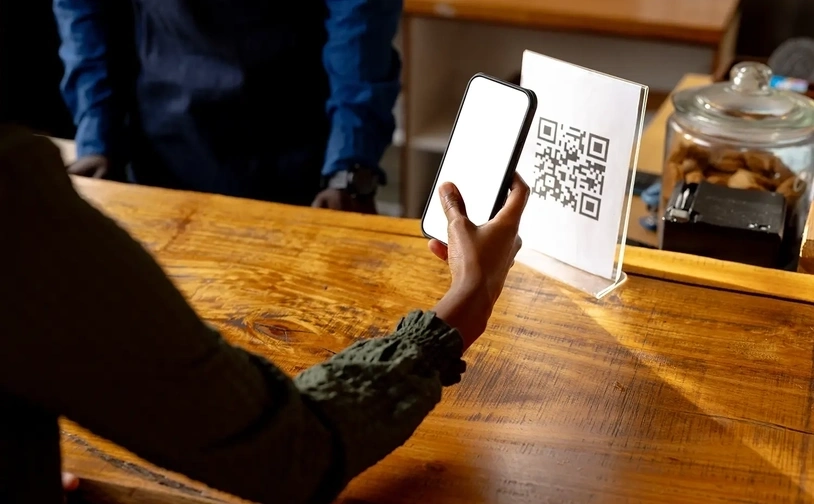
Transactions continue to become simpler and more focussed as payment technology is developed with more of a focus on customer centricity.
At the same time, consumers are becoming more comfortable working with the latest developments in technology.
QR codes can make payments fast and efficient, whether that’s in retail, dining, or making a charitable donation.
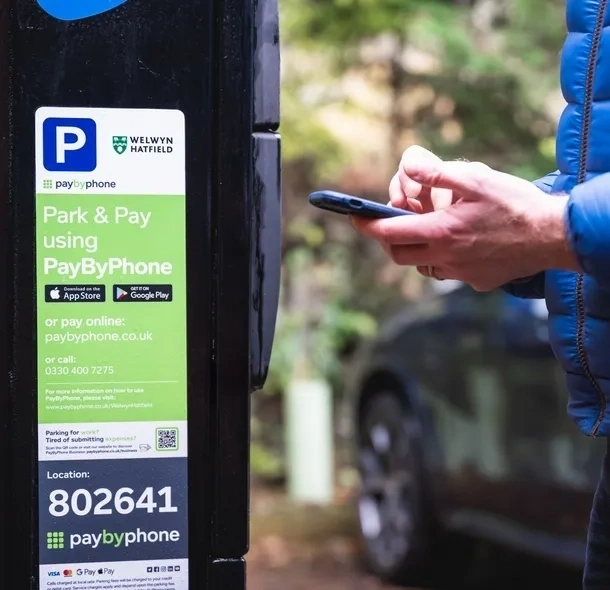
We also see QR codes being used for unattended payments like at a car parks, meaning any customer with a smart phone can make a quick and convenient payment. See below for more details on where QR
Brian Kinsella, Senior Regional Fraud Manager at Elavon Europe, said: “Simplifying the payment process can unfortunately result in unexpected risks that can be equally simple in their execution.
“Fraudsters take advantage of that simplification, redirecting unwitting customers to a fake payments page where their details are stolen.
“Examples of this scam are seen across the globe, and it is a clearly growing concern.”
“Thankfully there are a few simple steps to take to reduce the chances of falling victim to this kind of crime.”
Known as QR Phishing or “Quishing”, fraudsters cover the genuine QR code with their own QR code. This redirects customers to a fake payments page which is used to harvest their card details.
These details are used to commit further fraud elsewhere.
The impact is serious:
Lost sales from genuine customers
Customer’s payment, account, and personal details are compromised
Potential for further phishing attacks on the customer now the fraudster has an “in”
Customers may face penalties for failed or illegitimate payments
Increased risk of reputational damage for your business
There are some simple steps to help reduce the risk of your customers falling victim to this scam
Regularly check the payment terminal for signs of tampering with the QR code
Use dynamic digital QR codes rather than a static QR code sticker
For unmanned locations where a dynamic digital QR code is not possible, remove the QR option and use contactless readers instead
Monitor your payments volume for any signs of unexpected processing dips
By taking these steps we can continue to reduce the risk of fraud, keep customer data safe, and drive trust in your business.
For consumers, the UK’s National Cyber Security Centre suggests people use a phone’s inbuilt QR-scanner rather than downloading an app. It warns people to be wary of QR-codes sent in emails.
How do QR codes work in payments?
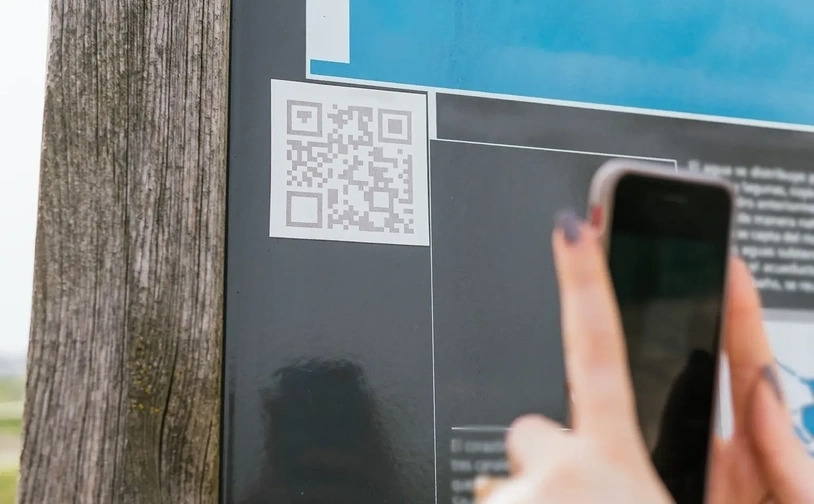
A QR code is a type of barcode which contains information that can passed quickly to someone using a reader, such as one built into their phone.
If it’s being used for a transaction, such as at a table in a bar or restaurant, the code will direct the customer to a webpage or app where the businesses’ takes payments meaning all the customer has to do is enter their details and payment is quick and seamless.
For parking or other similar unattended payment locations, the location or other relevant data can be included in the QR code, again making the payment process simpler.
There are two main types of QR codes:
Static codes contain fixed information which cannot be changed once it has been generated. They might be used to direct to a website, share a Wi-fi password, or provide contact details. Static codes don’t need the user to be connected to the internet because all the information is contained in the code. Unless it’s being used to direct people to a website.
Dynamic codes embed a short URL in the code, directing users to a website. This can be altered after the code has been created. Because dynamic codes always direct users to a website, users have to be connected to the internet to be able to use. Dynamic codes are easier for devices to read and can also be used to collect data such as how often a code has been scanned, what times of day or what kind of device was used.
A digital dynamic QR code, as suggested above as a safer alternative, is a dynamic QR code on a screen. If a fraudster was to cover the screen with a sticker, it would be much more obvious to a consumer. Dynamic codes also provide data, such as how often it is being scanned, meaning you can see if there is a sudden drop in usage.
Where might you see QR codes for payments?
QR codes have been around since the 1990s but their use in the payments industry really took off during the Covid pandemic, particularly in the hospitality industry.
Today you can find them in a wide variety of businesses, driven by the widespread adoption of mobile technology and consumers’ increased comfort in embracing technology developments.
Pay-at-table in restaurants
A QR code is printed on a receipt or placed on the table. Diners scan the code to see their bill and pay from their phone, reducing queues and speeding up the transaction.
Food and drink ordering
At quick-serve restaurants, cafés and even pubs, a QR code leads customers to a menu where they can order and pay, either at a table or a kiosk.
Ticketing
QR codes are commonly used as proof of payment for tickets. The QR code is then used to gain entry to a gig or to be scanned by a ticket collector on a train.
Retail in‑store payments
Retailers can display a QR code at checkout for customers to scan and then pay using a mobile wallet or banking app. This is particularly useful for pop-ups or smaller retailers where it’s tricky to use more traditional POS devices.
Parking
Many people will be familiar with QR codes when having to pay for parking. Drivers scan the code, enter their vehicle details, and pay digitally, either in-app or on a ecommerce website. It saves the business having to handle cash and is convenient for customers.


Continue reading related articles

The Elavon edge: security you can trust
Our security operations are built on rigorous processes, global expertise and regulatory oversight. Learn how we help businesses navigate a complex payments landscape with confidence.
Customer story: PayByPhone
See how our speed, security, approval rates, award-winning support, integration, reporting and award-winning Transaction Risk Analysis is helping PayByPhone grow.
The ultimate guide to security
Strong security isn’t just protection - it’s performance. Download our guide to find out how payment security drives efficiency.

Helping thousands of customers around the world grow their business through payments
Customer service and support
We’re here to help!
Customer service: 0345 850 0195 (menu option 2)
Telephone: Monday to Friday, 8am to 5pm
Chat: Monday to Friday, 8am to 6pm
Elavon technical support: 0818 20 21 30 (menu option 1)
24 hours a day, 365 days a year
Opayo product support: 0191 313 0299
24 hours a day, 365 days a year
Copyright © 2026 | U.S. Bank Europe DAC. Registered in Ireland with Companies Registration Office. The liability of the member is limited. United Kingdom branch registered in England and Wales under the number BR022122.
U.S. Bank Europe DAC, trading as Elavon Merchant Services, is a credit institution authorised and regulated by the Central Bank of Ireland. Authorised by the Prudential Regulation Authority. Subject to regulation by the Financial Conduct Authority and limited regulation by the Prudential Regulation Authority. Details about the extent of our regulation by the Prudential Regulation Authority are available from us on request.
Helping thousands of customers around the world grow their business through payments
Customer service and support
We’re here to help!
Customer service: 0345 850 0195 (menu option 2)
Telephone: Monday to Friday, 8am to 5pm
Chat: Monday to Friday, 8am to 6pm
Elavon technical support: 0818 20 21 30 (menu option 1)
24 hours a day, 365 days a year
Opayo product support: 0191 313 0299
24 hours a day, 365 days a year


Copyright © 2026 | U.S. Bank Europe DAC. Registered in Ireland with Companies Registration Office. The liability of the member is limited. United Kingdom branch registered in England and Wales under the number BR022122.
U.S. Bank Europe DAC, trading as Elavon Merchant Services, is a credit institution authorised and regulated by the Central Bank of Ireland. Authorised by the Prudential Regulation Authority. Subject to regulation by the Financial Conduct Authority and limited regulation by the Prudential Regulation Authority. Details about the extent of our regulation by the Prudential Regulation Authority are available from us on request.

Essential cookies enable core functionality such as page navigation and access to secure areas. The website cannot function properly without these cookies; they can only be disabled by changing your browser preferences. Please see our Cookie Policy for further information.
Performance cookies help us to improve our website by collecting and reporting information on its usage (for example, which of our pages are most frequently visited).
These cookies and similar technologies gather information about your browsing habits. They remember that you've visited a website and share this information with other organisations, such as advertisers and platforms on which we advertise. They do this in order to provide you with advertisements that are more relevant to you and your interests. These cookies and similar technologies gather information about your browsing habits. They remember that you've visited a website and share this information with other organisations, such as advertisers and platforms on which we advertise. They do this in order to provide you with ads that are more relevant to you and your interests.
Find out more about cookies on https://www.allaboutcookies.org