




Technology is evolving fast, reshaping how retailers engage with customers and manage operations. From mobile devices doubling as payment terminals to AI anticipating consumer needs and guiding retailer decisions, innovation is driving a smarter, more seamless shopping experience.
As retailers embrace these changes, the future of commerce is becoming more intuitive, personalised and efficient, powered by intelligent software, connected devices and the growing influence of consumer behaviour online.
Here are a few key developments to watch for in the near future.
Mobile devices becoming payment terminals
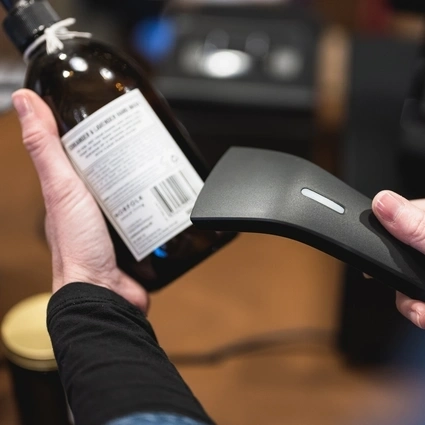
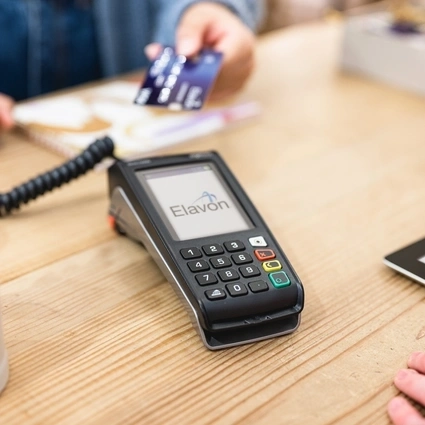
Software point-of-sale (SoftPOS) is a revolutionary technology that brings the security of card terminal payments to any other device or piece of hardware. It’s a game-changing innovation for the retail sector, allowing the expansion of low-cost yet highly multi-functional Android devices onto the shop floor.
“This innovative approach helps make shop workers incredibly productive and means the experience for the customer is much more present and immediate,” says Scott Frisby, Head of Strategy at Elavon Europe.
“While on the shop floor, staff are equipped to check whether items not displayed are in the stockroom, for example, as well as place orders and take payments – all from a single device.”
Airlines and restaurants across Europe are already embracing digital convergence and providing service workers with smartphones or tablets to improve the customer experience. Scott expects the concept to really catch on in retail stores in the coming months and years.
“We’ve recently worked with retailers in the Nordic countries and Poland on rolling out SoftPOS. We see it expanding further in the UK and particularly in Ireland,” he says.
The solution allows merchants to turn any Android mobile device into a fully card-present payments terminal by simply downloading an application that integrates with the payments platform. No additional hardware is needed. It works equally well for micro-merchants and large enterprise merchants.
“For someone selling cakes at a weekly farmer’s market, their smartphone can double up as a payment acceptance device and allow them to tally their sales at the end of the day,” says Scott.
“At the other end of the scale, SoftPOS allows large stores with lots of floor staff to bring the selection and purchasing experience together in shop locations that aren’t near the tills.”
AI anticipating consumer purchases
Artificial intelligence (AI) plays two main roles when consumers go online to research what’s available before making a purchase. Taking the example of fashion, Scott explains how this plays out: “The first is a time-saving role, as AI will scour the web and bring you a curated shortlist of suitable items based on your general criteria – for example, ‘blue, wool, formal coat in the price range of £100-150. It’s like having a shop assistant who’ll do a lot of the legwork for you,” he says.
“The second role – which we’re beginning to see more of – is the ability to get to know you and begin to recommend things that you may not be aware you want. It involves AI understanding things like your style, preferences, frequency of purchase and budget range.
“It’s the equivalent of a celebrity in Hollywood hiring a stylist who’ll bring entire wardrobes to them and push them into evaluating new types of clothing. Sites such as Vinted are already tapping into this development by using AI to allow stylists to offer a personal shopping service to their clients.”
While the first generation of machine learning recommends items similar to what you’ve already looked at online, this next generation presents you with alternatives based on collective searches from other people who’ve looked at the same things.
“If you’ve looked for holidays in the Maldives, you’ll see more advertisements for holidays in the Maldives. Now, you’ll also see adverts for the Seychelles, for example, as AI knows from collective searches that people interested in the Maldives will also be interested in the Seychelles,” says Scott.
“This two-steps-ahead thinking anticipates with accuracy the types of purchases you’re going to make in the future, based on collective analysis of millions of other consumers in the past. It’s an incredibly powerful tool.”
AI as driver of retailer decision making
First-party AI apps are helping retailers to use their own data to power AI-driven features on their websites, such as personalised recommendations, targeted marketing and improved customer service. A game changer coming down the line are first-party AI apps that can make merchandising recommendations based on collective searches, according to Scott.
“We’re seeing the first examples of this in Asia and should begin to see it in Europe. It means smaller merchants can now have access to collective wisdom from the best of AI with a monthly subscription, rather than having to develop proprietary software or install a solution onto their operating system,” he says.
“This much more intelligent AI is allowing retailers to understand the market much better, faster and cheaper than they would on their own – and then make quicker decisions on product ranges or pricing.
“Retailers try to understand the market in lots of ways, from looking at what’s selling well in their own shops to consumer research and mystery shopping in other stores. The AI eliminates the need for most of that, as it scours so many different inputs and records to show what’s selling nationwide and can give merchants that intelligence almost in real time.”
Mobile and social commerce in the mix
In 2024, smartphones accounted for nearly 80% of all retail website visits worldwide and generated most online orders, compared to desktops and tablets, according to research by Statista. Mobile – whether using retail companies’ apps, websites or social media – is connecting brands and consumers right across the shopper journey.
When consumers are shopping on their smartphone, a key trend Scott has observed is the preference to stay in a single app and, once there, the preference to use a wallet-based payment such as Google Pay or Apple Pay.
“Consumers tend to prefer apps to websites, as an app will typically curate the product selection a bit more. It will tend to have fewer products, with a simpler layout and less functionality than a website, but will be more concentrated. Consumers want the payment experience to be just as simple and be able to press ‘OK’ by using a wallet,” he explains.
“Smaller retailers are unlikely to have their own app, but ecommerce platforms such as Shopify, Squarespace or Wix can help them to get all the digital tools necessary to create a mobile and web presence that belies their size.”
Social media’s prominence as a primary source of brand awareness and product consumption has surged in recent years. PwC’s Voice of the Consumer Survey 2024 found that 67% of respondents used social media to discover a new brand and 70% sought reviews to validate a company before making a purchase. A significant proportion (41%) of respondents noted that a celebrity or influencer had played a part in their decision to make a purchase.
Drawing on research of 31 different countries, the same survey revealed that 46% of consumers purchased products directly through social media, up from 21% in 2019. However, Scott doesn’t expect social shopping to take off in Europe any time soon.
“Social shopping is something that should be observed with caution. It’s very big in Asia, where influencers are selling a lot of beauty products on Instagram and via WeChat or Weibo. X also now has a shop feature where businesses and creators can showcase and sell their products directly on the platform,” he says.
“We believe social shopping will be a very slow burn in Europe. Adverts on social media platforms will continue to be super effective as a way to spread brand awareness, generate interest, educate consumers about products and bring them to shops or websites. Using those platforms for actual transactions, payments or after-sales service would be the final frontier.”






Helping thousands of customers around the world grow their business through payments
Customer service and support
We’re here to help!
Customer service: 0345 850 0195 (menu option 2)
Telephone: Monday to Friday, 8am to 5pm
Chat: Monday to Friday, 8am to 6pm
Elavon technical support: 0818 20 21 30 (menu option 1)
24 hours a day, 365 days a year
Opayo product support: 0191 313 0299
24 hours a day, 365 days a year
Copyright © 2026 | U.S. Bank Europe DAC. Registered in Ireland with Companies Registration Office. The liability of the member is limited. United Kingdom branch registered in England and Wales under the number BR022122.
U.S. Bank Europe DAC, trading as Elavon Merchant Services, is a credit institution authorised and regulated by the Central Bank of Ireland. Authorised by the Prudential Regulation Authority. Subject to regulation by the Financial Conduct Authority and limited regulation by the Prudential Regulation Authority. Details about the extent of our regulation by the Prudential Regulation Authority are available from us on request.
Helping thousands of customers around the world grow their business through payments
Customer service and support
We’re here to help!
Customer service: 0345 850 0195 (menu option 2)
Telephone: Monday to Friday, 8am to 5pm
Chat: Monday to Friday, 8am to 6pm
Elavon technical support: 0818 20 21 30 (menu option 1)
24 hours a day, 365 days a year
Opayo product support: 0191 313 0299
24 hours a day, 365 days a year


Copyright © 2026 | U.S. Bank Europe DAC. Registered in Ireland with Companies Registration Office. The liability of the member is limited. United Kingdom branch registered in England and Wales under the number BR022122.
U.S. Bank Europe DAC, trading as Elavon Merchant Services, is a credit institution authorised and regulated by the Central Bank of Ireland. Authorised by the Prudential Regulation Authority. Subject to regulation by the Financial Conduct Authority and limited regulation by the Prudential Regulation Authority. Details about the extent of our regulation by the Prudential Regulation Authority are available from us on request.

Essential cookies enable core functionality such as page navigation and access to secure areas. The website cannot function properly without these cookies; they can only be disabled by changing your browser preferences. Please see our Cookie Policy for further information.
Performance cookies help us to improve our website by collecting and reporting information on its usage (for example, which of our pages are most frequently visited).
These cookies and similar technologies gather information about your browsing habits. They remember that you've visited a website and share this information with other organisations, such as advertisers and platforms on which we advertise. They do this in order to provide you with advertisements that are more relevant to you and your interests. These cookies and similar technologies gather information about your browsing habits. They remember that you've visited a website and share this information with other organisations, such as advertisers and platforms on which we advertise. They do this in order to provide you with ads that are more relevant to you and your interests.
Find out more about cookies on https://www.allaboutcookies.org